BGMEA DAILY DIGEST
News published in media related to RMG: Today’s RMG News
March 14, 2026

The Business Standard
US probes Bangladesh's export incentives, BGMEA 'uncomfortable'
Mahmud Hasan Khan, president of the Bangladesh Garment Manufacturers and Exporters Association (BGMEA), described Bangladesh's inclusion in the investigation as "uncomfortable" and "without logical basis". "If such allegations are proven, they may impose additional tariffs," he said."Export incentives in Bangladesh are minimal," Mahmud said, adding that while questions might arise about agricultural subsidies, the US itself heavily subsidises its farmers, whereas Bangladesh primarily subsidises fertilisers.

প্রথম আলো
ব্যবসা করতে চাইলে বায়িং হাউসকে বিজিএমইএর সহযোগী সদস্য হতে হবে
তৈরি পোশাকশিল্প মালিকদের সংগঠন বিজিএমইএর সদস্য প্রতিষ্ঠানের সঙ্গে ব্যবসা করতে হলে সংগঠনের সহযোগী সদস্যপদ নিতে হবে বায়িং হাউসকে। তা না হলে বায়িং হাউসগুলো বিজিএমইএর সদস্য প্রতিষ্ঠানের সঙ্গে ব্যবসা পরিচালনার ক্ষেত্রে সংগঠনের সেবা থেকে বঞ্চিত হবে। বৃহস্পতিবার বিজিএমইএর এক বিজ্ঞপ্তিতে বিষয়টি জানানো হয়। এতে বলা হয়, গত ১৪ জানুয়ারি বিজিএমইএর পরিচালনা পর্ষদের চতুর্থ সভায় হয়। সেই সভায় তৈরি পোশাকশিল্পের সামগ্রিক স্বার্থ ও জবাবদিহি নিশ্চিত করতে পরিচালনা পর্ষদ এ সিদ্ধান্ত নিয়েছে।
The New Age
National traceability strategy to be set up to ease EU markets access
Bangladesh is moving decisively to fortify its multi-billion dollar export trade against tightening European regulations, initiating the development of a comprehensive ‘National Traceability Strategy’. At the first meeting of the Policy Coordination Unit held on Thursday at the Ministry of Commerce, senior officials and trade leaders emphasised that establishing a strategic roadmap is now a matter of national economic security to meet the European Union’s Ecodesign for Sustainable Products Regulation, said a press release on Friday.Vidiya Amrit Khan, vice-president of BGMEA, noted that the apparel sector was already navigating increased demands for verifiable evidence of sustainable sourcing. She emphasised that the ESPR as designed to strictly monitor production to ensure it is free from child labour, unfair labour practices, and environmental degradation, affirming that compliance is ‘mandatory and non-negotiable’.
The Daily Sun
Supply chain disruption hampers business, hinders exports
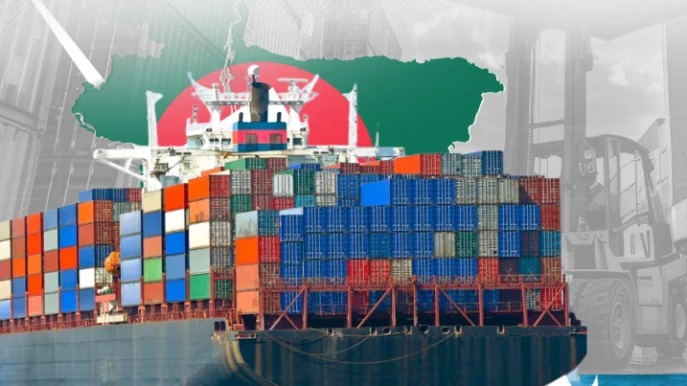
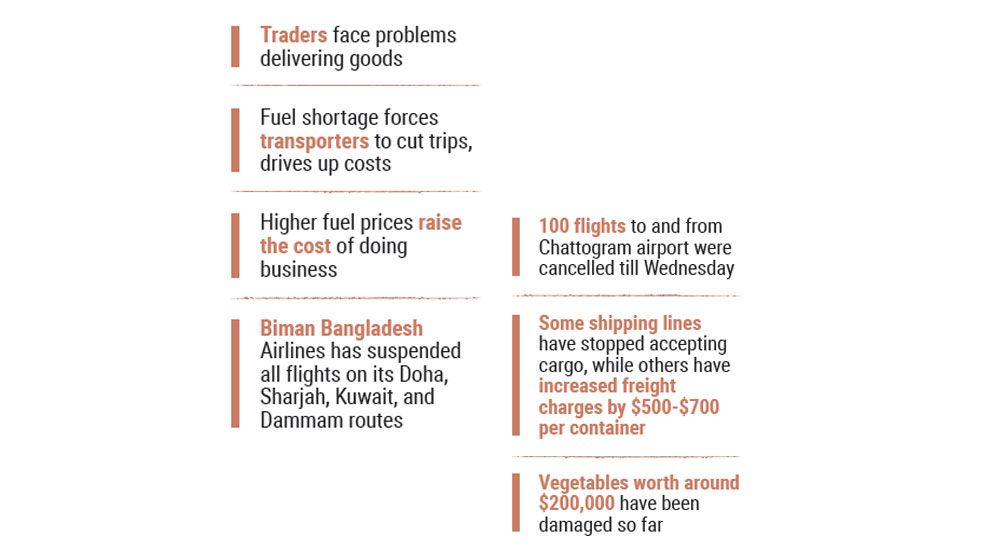
Business leaders say the crisis could also affect shipping and trade routes, raising freight charges and causing delays in export shipments. Garment exporters fear that production interruptions and rising energy costs could make it harder to meet strict delivery deadlines set by international buyers. Talking to the Daily Sun, Bangladesh Garment Manufacturers and Exporters Association (BGMEA) Director Faisal Samad said one of his shipments was delayed in reaching Chattogram Port because the truck could not refuel with diesel at petrol pumps. The ongoing war had a big impact on the entire supply chain.
মানবজমিন
রপ্তানি অর্ডার কমার শঙ্কায় রপ্তানিকারকরা
ডিবিএল গ্রুপের ভাইস চেয়ারম্যান এমএ রহিম ফিরোজ উদ্বেগ প্রকাশ করে বলেন, ইউরোপে খাদ্যপণ্যের দাম বেড়েছে বলে তারা ইতিমধ্যে রিপোর্ট পেয়েছেন। জ্বালানির দাম বাড়লে পরিবহন ব্যয়ও বাড়বে। আর চাইলেই সহজে বাড়ানো যায় না। ফলে ভোক্তারা আগে খাদ্য ও পরিবহন খাতে ব্যয় করবেন, আর পোশাক কেনা তাদের অগ্রাধিকার তালিকার নিচে চলে যাবে। এতে আমাদের রপ্তানি ক্ষতিগ্রস্ত হতে পারে। তবে তিনি বলেন, ইউরোপ ও যুক্তরাষ্ট্রের ক্রেতাদের কাছ থেকে এখনো কোনো নেতিবাচক সংকেত পাওয়া যায়নি। বিজিএমইএ’র পরিচালক নাফিস-উদ-দৌলা রোববার বিদ্যুৎ, জ্বালানি ও খনিজসম্পদ মন্ত্রীর সঙ্গে এ বিষয়ে আলোচনা করেছেন। তিনি বলেন, আমরা ডিজেল বিতরণে শিল্পকারখানার জন্য একটি নির্দিষ্ট কোটা বরাদ্দের অনুরোধ করেছি।
The Financial Express
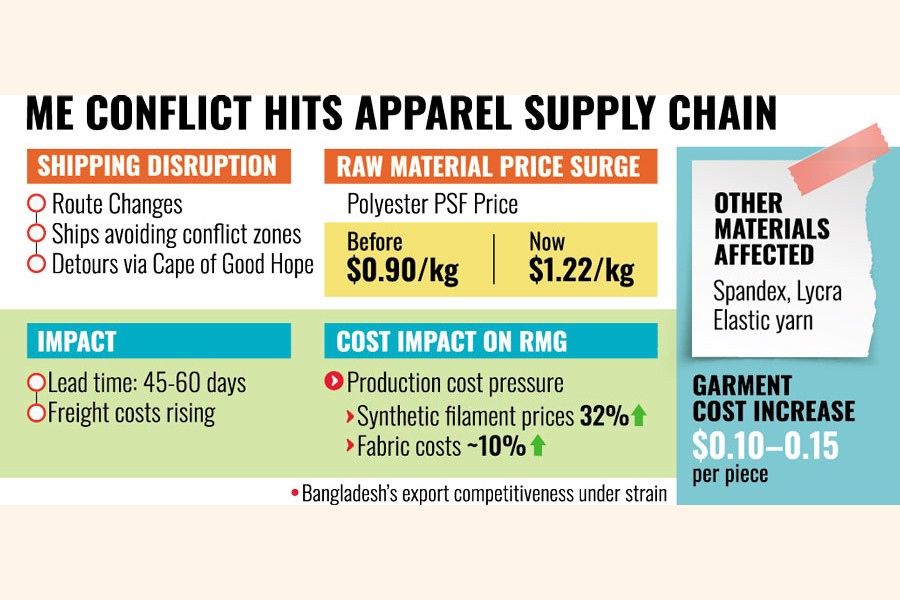
Apparel exporters' raw-material costs surge 32pc, export loss looms
Bangladesh's textile manufacturers, apparel exporters and global buyers alike feel mounting financial pressure under chain effects of the Middle East turmoil that disrupts major shipping routes and hikes freight, energy and raw material costs, industry insiders say. Initial shock is already being reported by global retailers as shipping expenses and lead times rise, while manufacturers are bracing for higher production costs due to surging prices of petroleum-based raw materials. Industry players have noted that the conflict has triggered volatility surrounding petroleum and its by-products -- key inputs for man-made fibre (MMF) and other synthetic textile materials -- raising the cost of producing blended fabrics and MMF-based apparel. Exporters are also concerned about potential container shortages and higher freight charges as shipping lines reroute vessels to avoid conflict-prone areas.